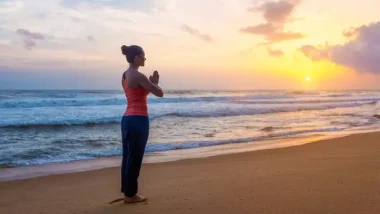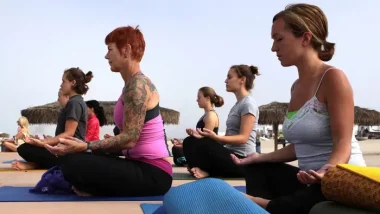

Flow into the world of Vinyasa Yoga, where movement and breath come together in a dynamic and transformative practice.
Experience the power of synchronizing your breath with each movement, allowing you to fully connect with your body and mind. With each inhale, feel the energy flow into your body, and with each exhale, release any tension or stress.
Let the fluidity of the practice take you on a journey of self-discovery and inner peace.
As you move through each pose, feel your body becoming stronger and more flexible, while your mind becomes clearer and more focused. Find your edge and push past it, as you explore new depths and dimensions of your practice.
Let the practice of Vinyasa Yoga be your sanctuary, your escape from the chaos of the outside world.
Vinyasa Yoga
Vinyasa yoga has become one of the most popular styles of yoga in the modern world. This energetic and flowing practice synchronizes breath with movement and has gained immense popularity in recent years. While it is a relatively new form of yoga, it draws on ancient yogic traditions and has a rich history.
The word “vinyasa” comes from the Sanskrit term “nyasa,” meaning “to place,” and “vi,” meaning “in a special way.” In vinyasa yoga, practitioners flow through a series of poses, with each movement linked to an inhale or an exhale. The practice is often described as a moving meditation, as practitioners strive to maintain focus and awareness throughout the practice.
History of Vinyasa Yoga
The origins of vinyasa yoga can be traced back to the teachings of Sri T. Krishnamacharya, who is often referred to as the father of modern yoga. Krishnamacharya developed a system of yoga that emphasized the connection between breath and movement, and his teachings influenced many of the modern styles of yoga that we practice today.
One of Krishnamacharya’s most famous students was Pattabhi Jois, who developed the Ashtanga Vinyasa Yoga system in the 20th century. Ashtanga yoga is a highly structured, vigorous form of yoga that involves flowing through a series of poses in a specific order. Jois emphasized the importance of the breath in his teachings, and encouraged his students to focus on the meditative aspects of the practice.
Vinyasa Yoga emerged as a modern form of yoga, developed from the roots of the Ashtanga Yoga tradition. As vinyasa yoga became more popular in the West, it began to evolve into its own distinct style. In the 1990s, American yoga teacher Shiva Rea developed her own version of vinyasa yoga, which she called Prana Flow. Rea’s practice focused on the fluid, creative aspect of vinyasa yoga, and encouraged students to explore their own unique expression of the practice.
Benefits of Vinyasa Yoga
The practice of vinyasa yoga has many benefits, both physical and mental. It can increase flexibility, strength, and balance, and can also help reduce stress and improve focus. The mindfulness and spirituality of the practice can also be a powerful tool for personal growth and transformation.
- Find your rhythm as you move through a series of poses that will challenge and invigorate your body and mind.
- Let go of stress and tension as you focus on your breath and the present moment.
- Embrace the power of movement and breath to create a sense of calm and clarity in your practice.
- Discover the joy of moving with intention and purpose, as you build strength and flexibility in your body.
- Experience the transformative power of Vinyasa Yoga, as you connect with your inner self and the world around you.
How to Start Practicing Vinyasa Yoga
If you’re new to Vinyasa Yoga, it’s important to find a qualified teacher who can guide you through the practice and ensure that you’re using proper alignment. Before class, it’s a good idea to prepare by wearing comfortable clothing and bringing a water bottle and towel. And if you encounter any challenges along the way, remember to be patient with yourself and keep practicing.
Beginners should start with a gentle, introductory class and focus on developing a strong foundation in the basic principles of the practice. Over time, as you become more comfortable with the practice, you can explore more advanced poses and variations.
In conclusion, vinyasa yoga is a modern, dynamic practice that draws on ancient traditions and has a rich history. Its emphasis on the connection between breath and movement makes it a powerful tool for both physical and mental well-being, and its popularity continues to grow around the world. If you’re looking for a dynamic and challenging form of yoga that can help you achieve greater mindfulness and spiritual growth, vinyasa yoga may be the practice for you.